Sunday 22nd November 2026

Museum Pieces

A magical history tour through a collection of curios and characters discovered in British galleries. Revisited and revised by John Holt from his original articles for Museums Journal magazine.

Exhibit C: Crystal Japan

The new wave - how Hokusai, chip forks and bedsprings all find a place in the wonderful waste-not-want-not world of recycling artist Michelle Reader
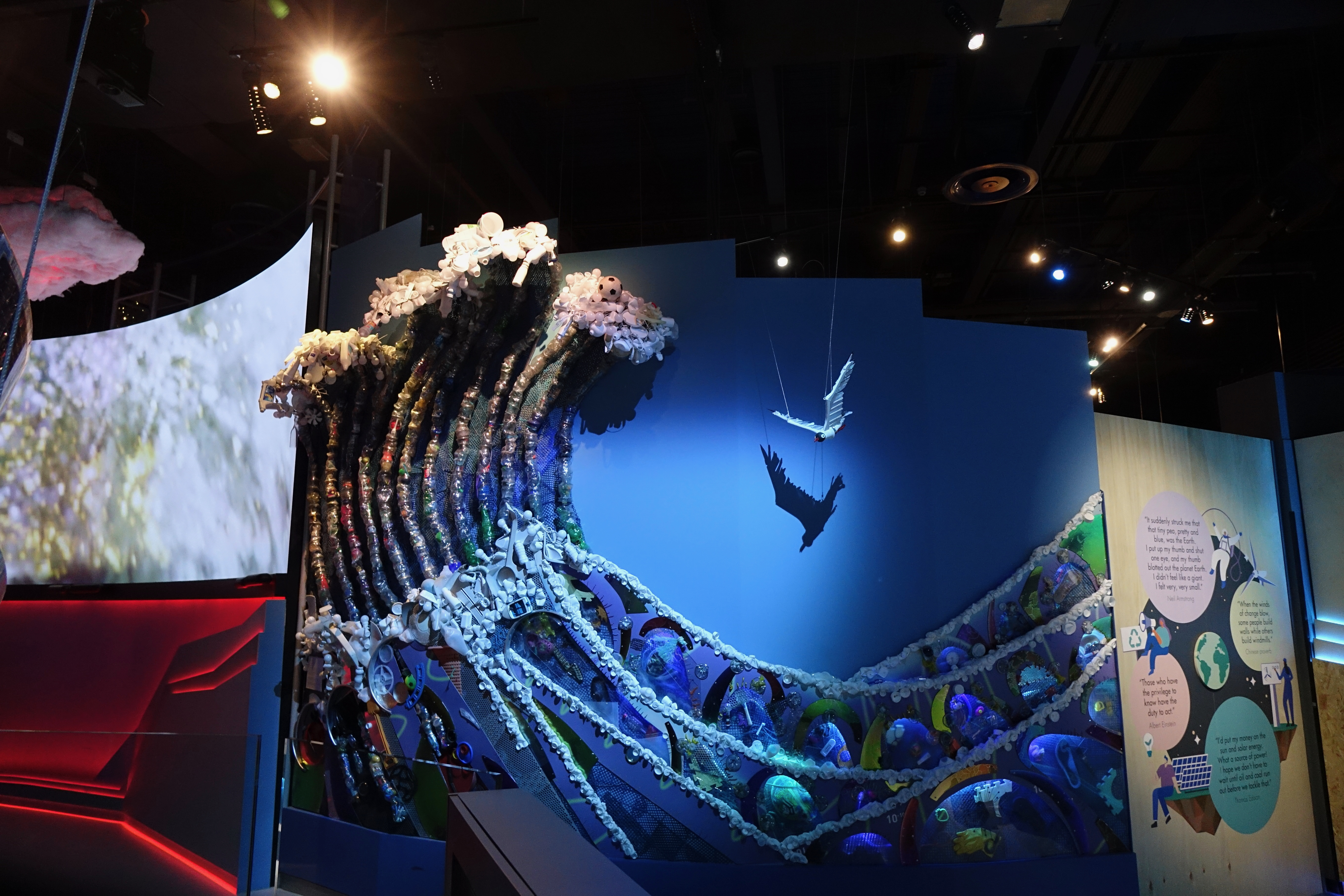
Exhibit C: Crystal Japan

The Home Planet gallery in the National Space Centre in Leicester takes an out-of-this-world interactive look at the part satellites play in our relationship with the Earth and how they will be utilised as we deal with future effects of the climate crisis.

For its launch in 2022, the centre wanted a striking statement artwork that would highlight the problem of pollution around the word.

It decided that a new version of the famous Great Wave off Kanagawa by the 19th-Century Japanese artist Katsushika Hokusai would not only draw attention to the issue but would also dramatically sweep across a gallery wall.

“We sold the idea to Michelle Reader, a Nottinghamshire-based artist who works with recycled materials,” says curator Dan Kendall.

“She plucked detritus from the River Soar which runs behind the Space Centre and collected rubbish from local businesses to make the new work.

“Michelle also cherry-picked metalwork and plastic panels from our old Orbiting Earth exhibition to recycle into the wave structure which also features everything from discarded plastic bottles and flip flops to a Minion toy and a Covid test kit.”

The pandemic meant artist and space museum weren’t able to meet properly during the construction phase which led to a few inter-galactic concerns in Leicester.

“We had no idea of what we were likely to receive,” adds Dan, “but there was relief all round when it turned out to look so impressive.

“It’s interesting now to see kids looking at it close up and spotting all the individual items of discarded rubbish.”

Alongside the recycled artwork, the gallery features a giant three-metre diameter Earth globe and the famous Blue Marble photograph of the planet taken on the Apollo 17 mission in 1972, adds Dan.

“From there, an enormous panoramic wall screen shows wonderful pictures and videos of different biospheres – rainforests, the oceans and so on – while the floor features accompanying projections of stepping stones, floating logs and sea creatures that appear to swim away from you as you approach,”

“Every 12 minutes, however, the screen turns into a single countryside vista with time-lapse imagery showing the effect of human activity while a giant thermometer records dramatically rising temperatures.

“Pulling out from the rural scene, we see the host of satellites orbiting the Earth, studying the climate variables.”

The gallery is not trying to bang people over the head with a sermon about recycling, says Dan, but visitors will hopefully take away the message about the need to take better care of the planet.

To that effect, infographics demonstrate the things that individuals can do to make a difference.

“Visitors also have the chance to make a pledge to be more responsible via a giant marble run.

“The marbles can take two routes down a giant structure; a positive pledge leads to an exciting voyage through the incredible contraption while the other choice dribbles out in in a short, unfulfilling run.”

Michelle Reader: Recycled artwork inspired by ‘The Great Wave off Kanagawa’ by Hokusai; 2022. All pictures courtesy of the artist

Hokusai: Thirty-Six Views of Mount Fuji is at Dulwich Picture Gallery, London, until 17 January 2027


What the artist did next: tales of the riverbank
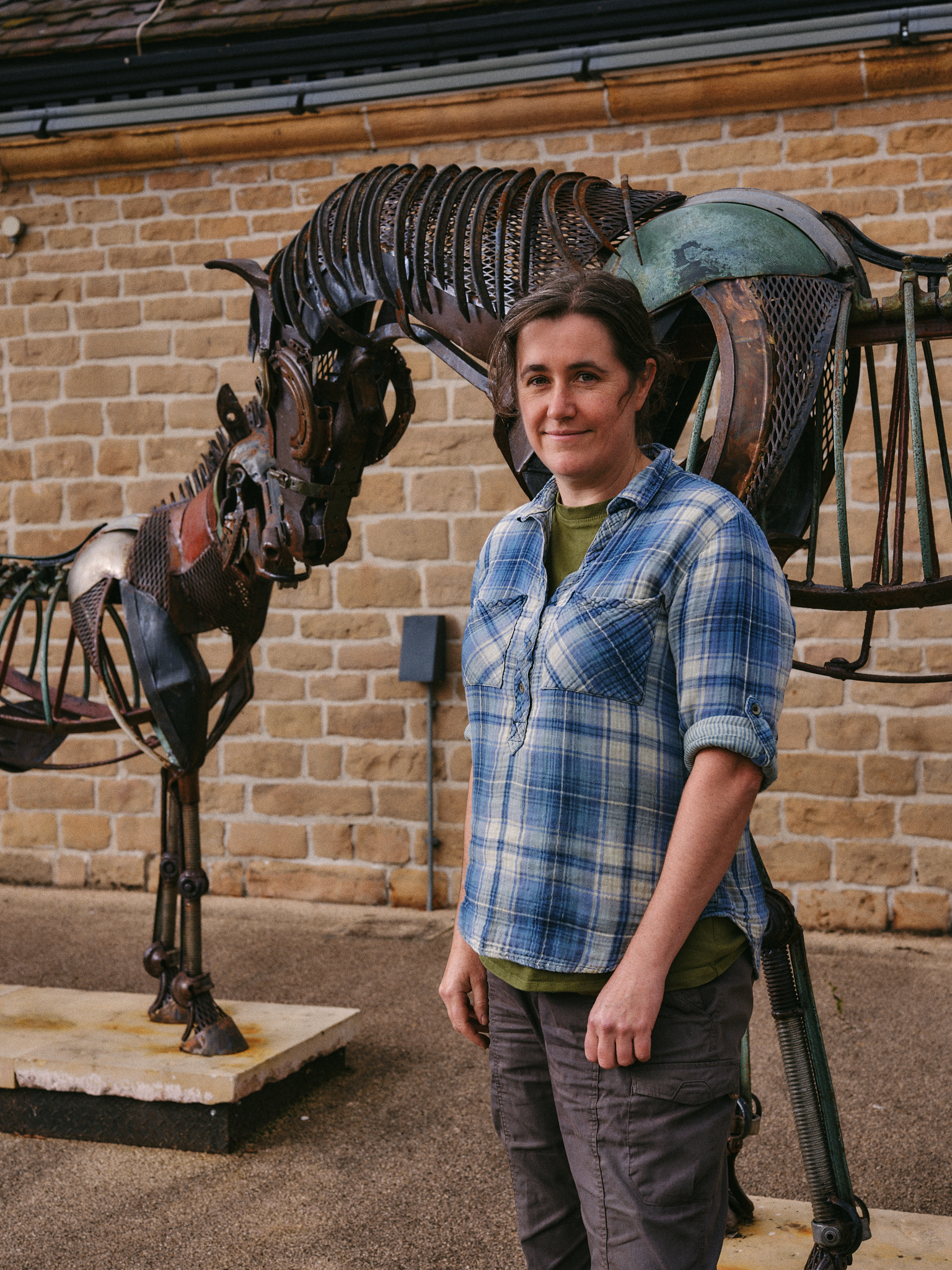
Always on the look-out for detritus she might re-use in one of her remarkable art pieces, Michelle Reader took to sifting through waterside debris like an unloved rubber duck to water when searching for potential Great Wave waste products.

“Rather appropriately, we found an old Buzz Lightyear football and a plastic boat,” she recalls of her expedition along the River Soar.

“Generally, people now know that I recycle quite a lot and often approach me with weird and wonderful things.

“I suppose I’m like an alternative charity shop; quite often, my neighbour will check with me to see if I want anything from the bags of stuff he’s taking to the tip,” adds Michelle, who began using found materials for her fine art degree.

“I loved the colours, the textures and the overall playfulness of re-purposing things that already had shapes and mechanisms. It became my USP.”

Her version of the Great Wave presented some new challenges, however.

“It has a dramatic curved shape, five metres wide and 4.5m tall so I had to build it in sections, painting outlines on the studio floor and placing pieces together.

“I also had to invent some new techniques for its construction; I heated plastic bottles to shrink around old bedsprings in order to make the vertical bits up the wave, for example.”

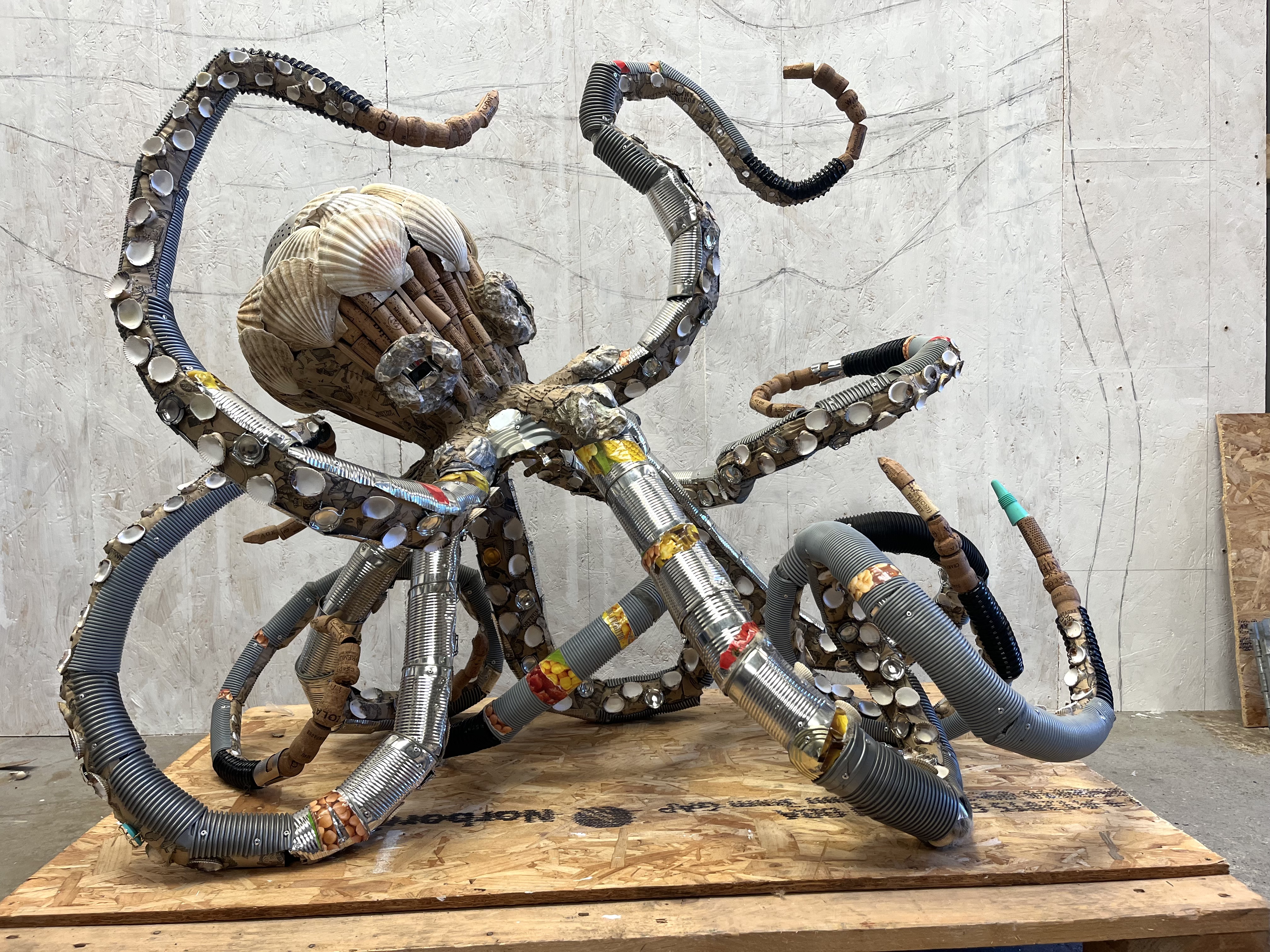
Michelle’s recent work found her all at sea again when she created a magnificent octopus for last year’s Fortnum & Mason autumn window display in London.

“Octopuses use natural waste, so the store wanted me to use left-overs from their kitchens; they supplied lots of champagne and wine corks and oyster shells which arrived in beautifully-branded boxes which I also included.”

Michelle works from a large studio on the impressive Welbeck Estate in Nottinghamshire, a former 12th-Century monastery and the country seat of the Dukes of Portland, which is also a hotbed of artists and artisan food and drink producers.

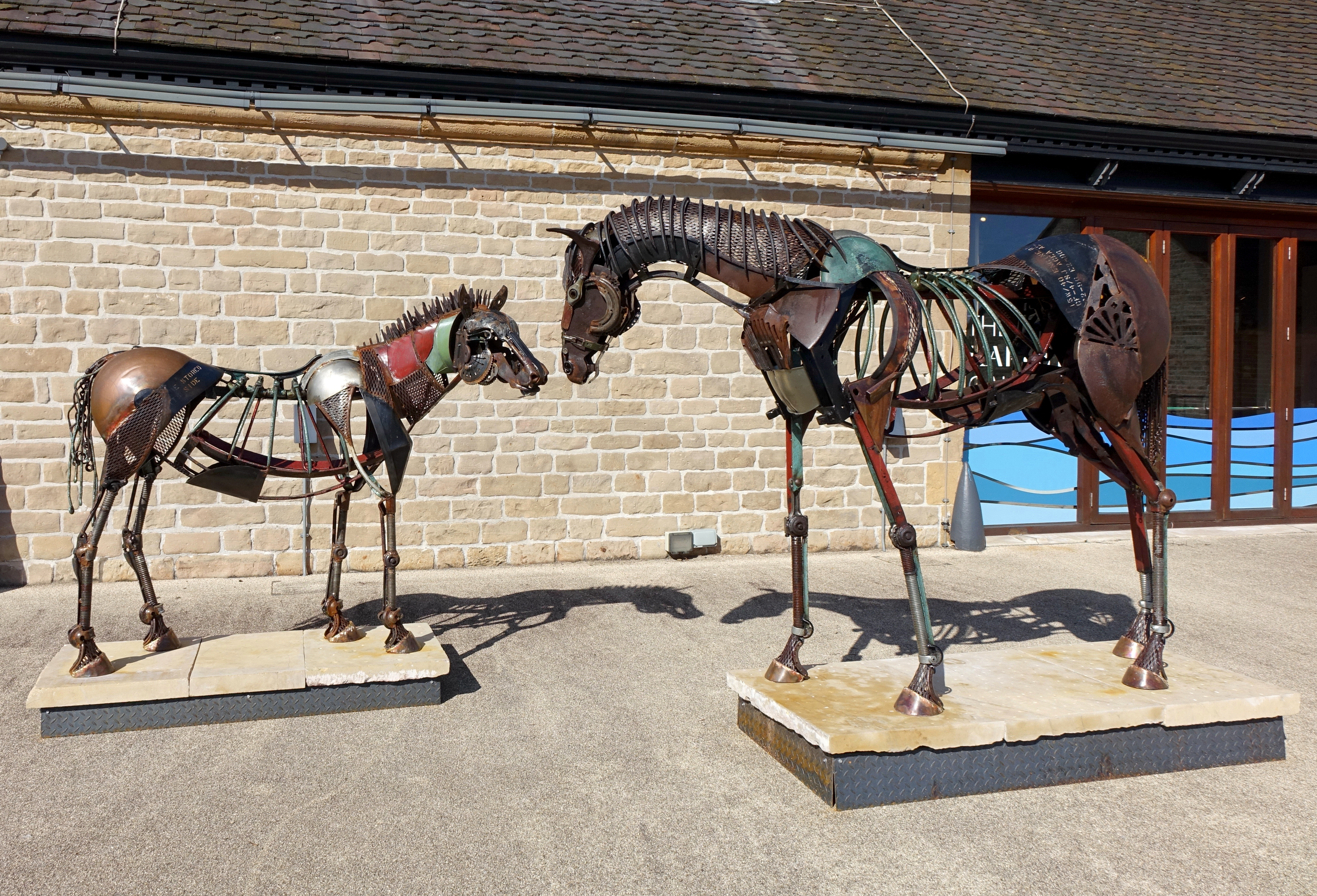
Alongside her Great Wave, the studio also afforded her the room to make two sculpted horses – one from prehistory and a modern-day racehorse – which have been installed on a walking trail between the Welbeck’s Harley Gallery and nearby Creswell Crags, the limestone gorge famous for its Upper Palaeolithic cave art.

The sculptures are made from salvaged architectural and agricultural metalwork found around the estate including copper cylinders from central heating systems, gate hinges, an oil drum and ventilation ducting.
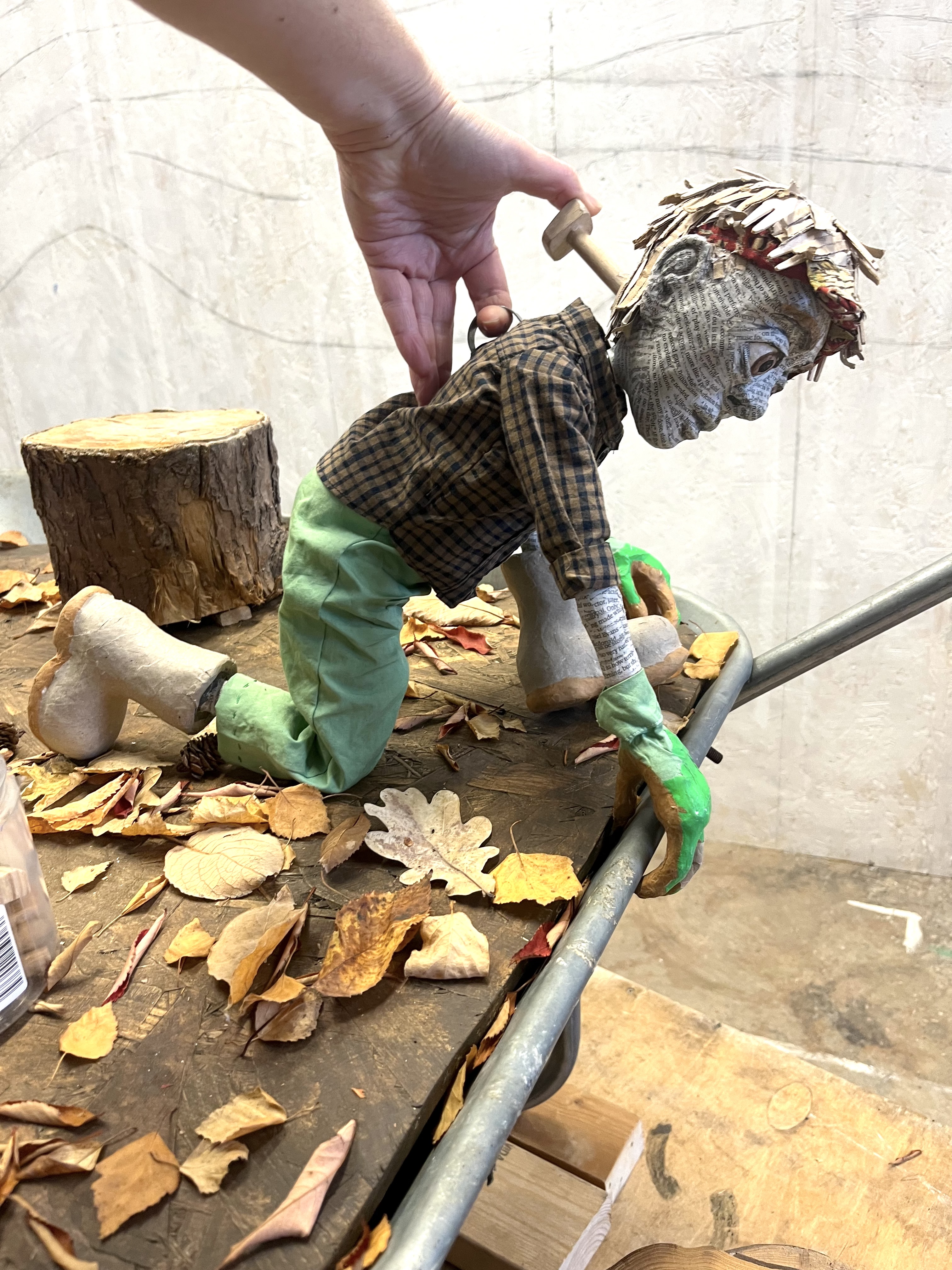
On a much smaller scale, Michelle has recently founded a puppet theatre company, Wayward Objects.

“I have made a spoonbill from plastic milk bottles, yogurt cartons and the mechanism of a litter picker while a park keeper has tiny charity shop clothes and hair made from chip forks.”

Read more

Exhibit B: Boys keep swinging

What links Winnie-the-Pooh – currently celebrating his 100th birthday – and medieval manuscripts?

  • Winnie-the-Pooh
  • EH Shepard
  • AA Milne
  • Exeter Cathedral
  • Micrographia
  • Exeter Book
Exhibit B: Boys keep swinging

This is a pencil drawing for the illustration that appears right at the beginning of chapter one in the first Winnie-the-Pooh collection of stories by A. A. Milne which was published exactly a century ago.

It shows the little boy Christopher Robin coming downstairs with his teddy bear; artist and illustrator E. H. Shepard uses white space and lines drawn over and over again to suggest the movement of the boy dragging his bear quite carelessly behind him.

“The scene is, however, slightly incongruous with the text which reveals that Pooh is actually thinking there must be better ways of descending the stairs,” says Emma Laws, co-curator of the landmark exhibition, Winnie-the-Pooh: Exploring A Classic (V&A, London; 2017-18).

“When you look at the picture, however, he’s just a completely lifeless toy,

“Little ironies like that add to the humour of the stories which I recommend adults of all ages should read again because they are often laugh-out-loud funny. Some of the puns, particularly, are just for grown-ups.

“Children, on the other hand, don’t see the problem as they have no real boundary between fiction and reality so it’s practically normal for them to see a toy and hear that he’s having thoughts.”

Every child has a favourite toy or favourite place and makes up stories set in imagined worlds and Milne’s tales can be quite serious adventures that involve becoming lost, scary animals and the threat of falling into the heffalump’s pit, adds Emma who, at the time of the show, was Frederick Warne Curator of Children’s Literature.

“A lot of people probably skim over the very first line of the book – ‘Here is Edward Bear, coming downstairs now, bump, bump, bump, on the back of his head’ – but I find it fascinating because the writer is apparently telling us to look at the pictures to get the whole story.

“The images are not there as pure decoration or to highlight a few details; they are crucial to the storytelling.”

The much-lauded, multi-sensory exhibition was aimed at immersing people in storytelling and to inspire them to fall in love with books, Emma recalls.

“We asked Tom Piper - the designer who worked on the Blood Swept Lands and Seas of Red poppies installation at the Tower of London - to come up with an overall concept and he did a marvellous job in bringing text and language to life.”

On entering the gallery, visitors of all ages were delighted to find themselves in an old-fashioned nursery kitted out with balloons, umbrellas, and games to play such as an indoor Poohsticks experience, complete with bridge and Hundred-Acre Wood backdrop.

Emma remembers the whole process being an absolute delight.

“As we put it together, for example, our project management meetings were more interesting than most; anyone listening in or over-hearing us talk about the tra-la-la and tiddly-pom drawings must have thought we were slightly strange.”

E. H. Shepard: Bump, bump, bump from Winnie-the-Pooh, 1926. 1 x black and white illustration from 'Winnie-The-Pooh', copyright © E. H. Shepard LLP / The E. H. Shepard Trust, 1926. Reproduced with permission from Curtis Brown Group Ltd


What the curator did next

“You don’t accept an offer to research and write about Winnie-the-Pooh without some degree of caution – after all, it’s rather hallowed ground,” says Emma Laws, looking back on the V&A show a decade on.

“I loved deep-diving into Milne’s language, however, and exploring how it combined with Shepard’s illustrations.

“The highlight for me was deciding how to make Milne’s language concrete within the exhibition space. I wanted visitors to be surrounded by words and phrases – hanging from the ceiling, projected onto walls, and falling and dispersing in the ‘stream’ running under Poohsticks Bridge. 

“We even had words that people could sit in or crawl through. Milne’s language is fun and it bounces; that was the key challenge for me – to create fun and movement with words and punctuation.” 

Shortly after the exhibition, Emma relocated to Devon where – at least initially – she was known in certain circles as the ‘Winnie-the-Pooh lady’. She is now acknowledged as the librarian at Exeter Cathedral.

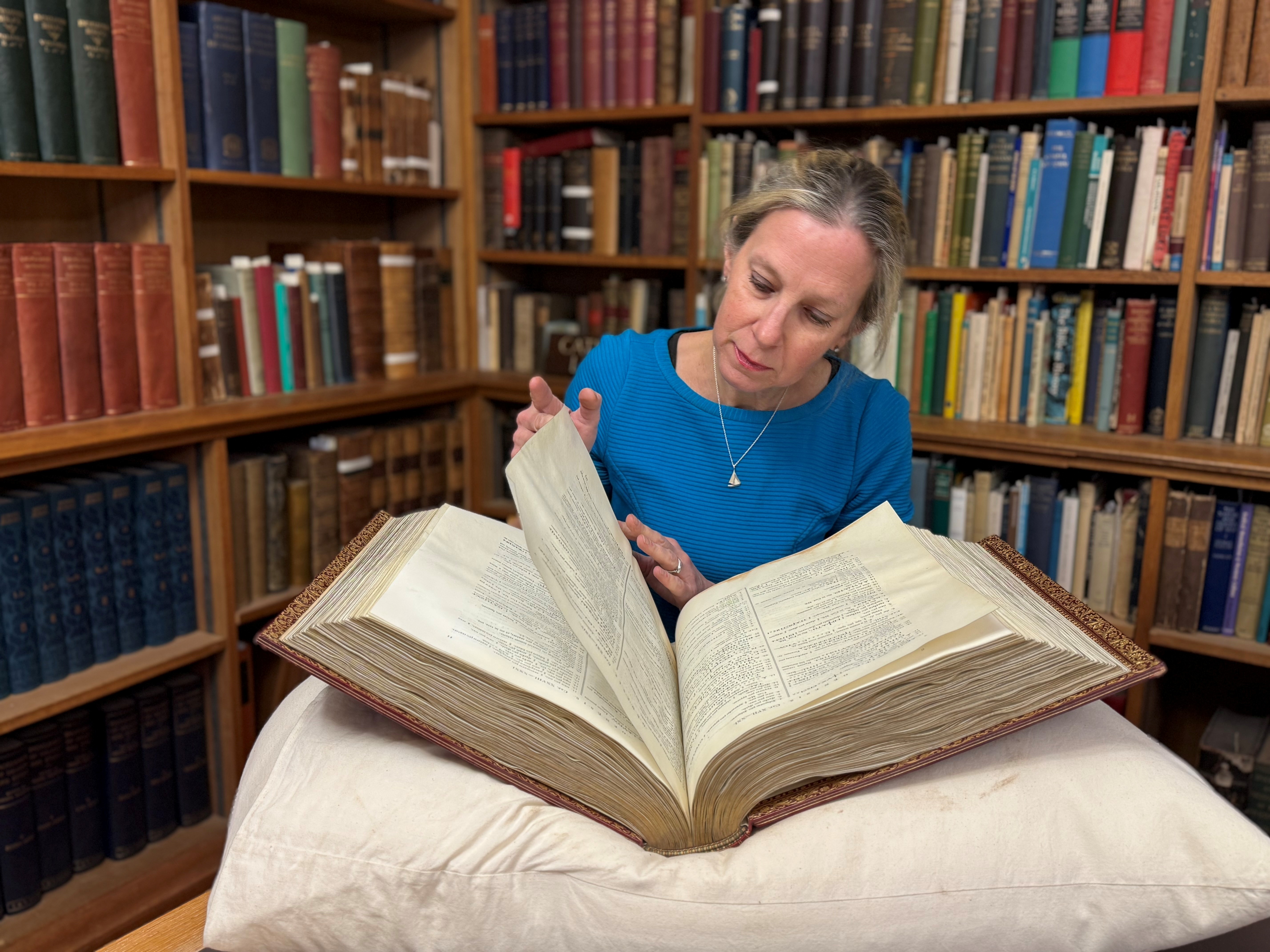
Woman reading big, historical book in ancient library
Speaking volumes - Emma Laws in Exeter Cathedral Library

“It may appear that I swapped Winnie-the-Pooh for early printed volumes and medieval manuscripts, but I initially trained as a rare book librarian so, in many ways, I have come full circle.”

Emma remains drawn to the interplay of word and image in texts.

“You can ask the same questions whether you’re looking at Edward Ardizzone’s Little Tim and the Brave Sea Captain from 1936 or a copy of Robert Hooke’s Micrographia from the mid-17th Century.

“For example, ‘who is the illustrator’, ‘how are the illustrations printed’, ‘how do the illustrations develop the story of the text’ etc. I apply those skills to any book with a picture.”

These are exciting times in the cathedral library, Emma adds.

“We have just opened our brand-new Treasures Exhibition featuring the oldest surviving foundation charter of any English cathedral and the oldest part of England’s oldest public record, Exon Domesday.

"The real highlight is working with the Anglo-Saxon Exeter Book, the oldest volume of English literature in the world; it’s not actually illustrated, but it’s a joy nonetheless.”

Read more

Exhibit A: Future legend

A couple of colourful cultural icons kickstart our flick through some of art history’s more idiosyncratic back pages.

  • Clanger
  • V&A
  • Postgate
  • Bowie
  • Geoff MacCormack
  • Russia
  • Trans-Siberian Express
Exhibit A: Future legend

Little Wonder

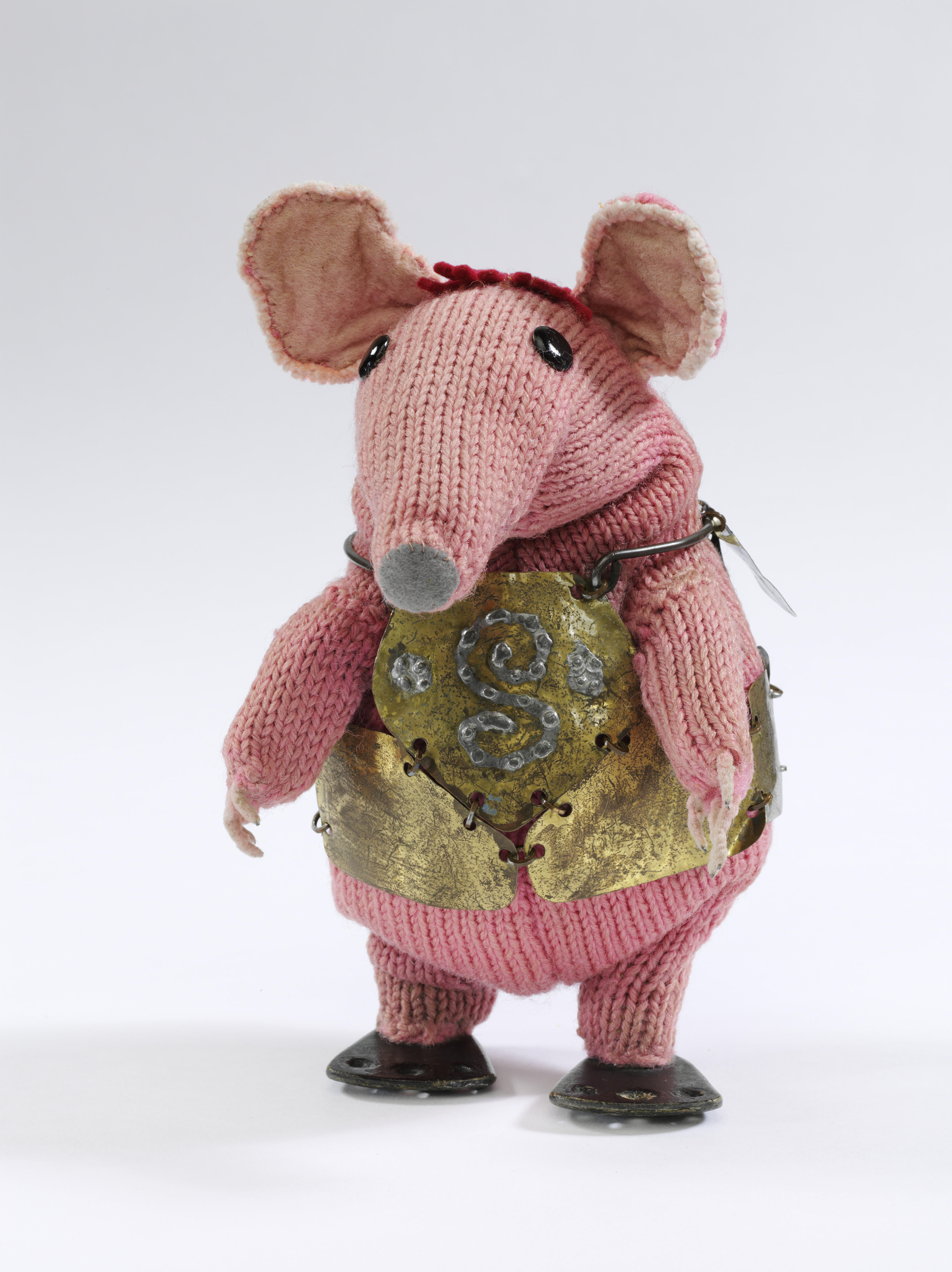
“I like this tiny chap because - even though he’s a mischievous mouse-like alien creature who communicates via a series of whistling noises – he has some very human characteristics and a particularly great outfit,” says Alice Sage.

Alice was the curator of the 2016 exhibition, Clangers, Bagpuss & Co. at what was then the V&A Museum of Childhood in London’s Bethnal Green, an institution that has since re-branded as Young V&A.

“While putting the show together, I made something of a pilgrimage to meet the artist Peter Firmin at the farm where he and the late Oliver Postgate made 1960s and 70s children’s TV favourites such as The Clangers, Bagpuss, Pogles’ Wood and Noggin the Nog.

“His wife Joan knitted the Clangers’ bodies, and she told me some of their clothes had been inspired by an old picture of Twiggy. I searched around for a photo and eventually came across one in which the famous model wore a metal dress made by Paco Rabanne.

“It’s nice to think that Small Clanger’s brass armour was based on a design by an enfant terrible of 60s French fashion.”

Postgate and Firmin’s Smallfilms company had been making programmes with paper cut-outs and puppet animations for ten years when the BBC asked them to produce a new series in colour with a space theme for the run-up to the Moon landings.

“There was also a desire to move away from the more didactic children’s TV of the time with an emphasis more on encouraging young viewers to open their minds and ask questions rather than simply being supervised to make things,” said Alice.

The pair looked through some of their old notebooks and found an old Noggin the Nog story which very briefly featured a character called a space mouse.

Postgate took the idea and created the Clangers family who lived on a planet populated by strange creatures such as the Iron Chicken, Soup Dragon and Froglets.

The format also allowed Postgate to explore some of his favourite themes such as technology, environmental wastefulness and the human qualities of friendship and empathy, added Alice.

“Interestingly, all the scripts were originally written out in full English with Postgate later ‘translating’ the dialogue into Clanger language on a slide whistle.

“His accompanying voiceover made him an avuncular presence holding your hand as you entered a very different world. As a child in the 1980s, I watched The Clangers endlessly on repeat and those kind tones, with just a hint of irony, always reassured you that everything was going to be OK.”

People never forget the children’s TV with which they grew up, she added.

“I had never seen the V&A conservation studios so busy as the time we were preparing the show; all sorts of important people suddenly found excuses to pop in because they had heard that Bagpuss was in the building.”

Small Clanger by Peter and Joan Firmin (1968) © Smallfilms/Victoria and Albert Museum, London. Courtesy of Harry Postgate. First published in April 2016.


What the curator did next

Looking back on Clangers, Bagpuss & Co. for Museum Pieces made Alice Sage realise just what a long-lasting effect those cloth characters have had on her subsequent working life.

“Taking familiar subjects and making them relevant to contemporary audiences and issues - rather than merely indulging in straightforward nostalgia - became a continuous theme for me,” she says.

“With childhood collections particularly, it can be so easy to dip into rose-tinted memories, but that’s not our job.”

Alice fondly recalls her collaborative work with Simon Leach Design on the much-loved exhibition.

“I’m the type of curator with strong ideas who’s probably a nightmare to work with but Simon and his team took what I was trying to do and gave the exhibition a hand-drawn backdrop that made visitors feel they were actually walking into the Smallfilms barn in Kent.

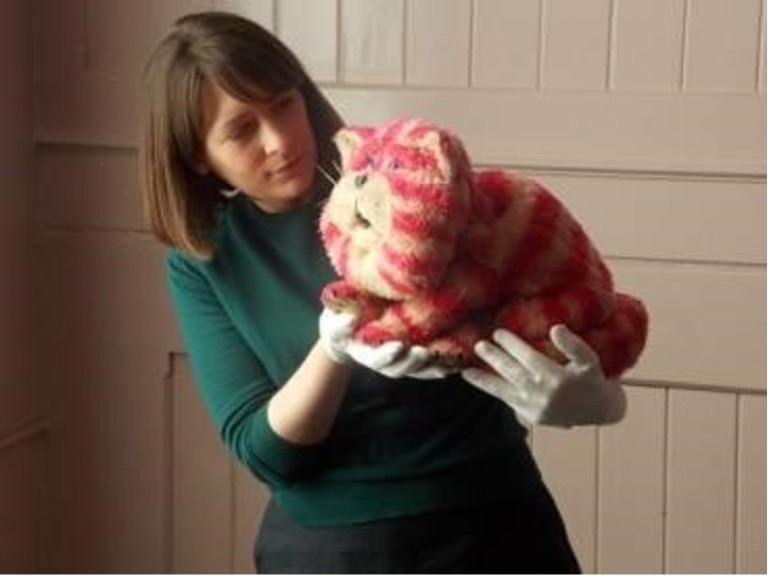
“Hand-written text was conversational and engaging in tone, rather than in a fixed historical voice, with lots of lovely details for the kids to spot,” says Alice who also enjoyed her own spell in the limelight when she featured in the exhibition’s press coverage.Woman with stuffed toy cat Bagpuss

“If you Google me now, you’ll find lots of newspaper pictures of me with Bagpuss.

"It’s the best thing, as everywhere I go - or when I apply for jobs - people want to talk about Clangers. It sowed so many seeds for the work I’d do later.”

Alice moved to a National Trust cottage in the Lake District for a curatorial spell at the Beatrix Potter Museum. Now a freelance curator, she recently completed a research fellowship project into British film costume design.

“And that, of course, took me right back to talking to Joan Firmin a decade ago about how she dressed the Clangers.”


David Bowie asleep on a train

Station to station

Back in 2021, it seemed the world was still trying to come to terms with the death of David Bowie five years earlier.

He continued to crop up in his many famous guises in galleries across the world, but few shows were as personal and insightful as the photographic exhibition, 73-76: Rock ‘n’ Roll With Me at Brighton Museum and Art Gallery.

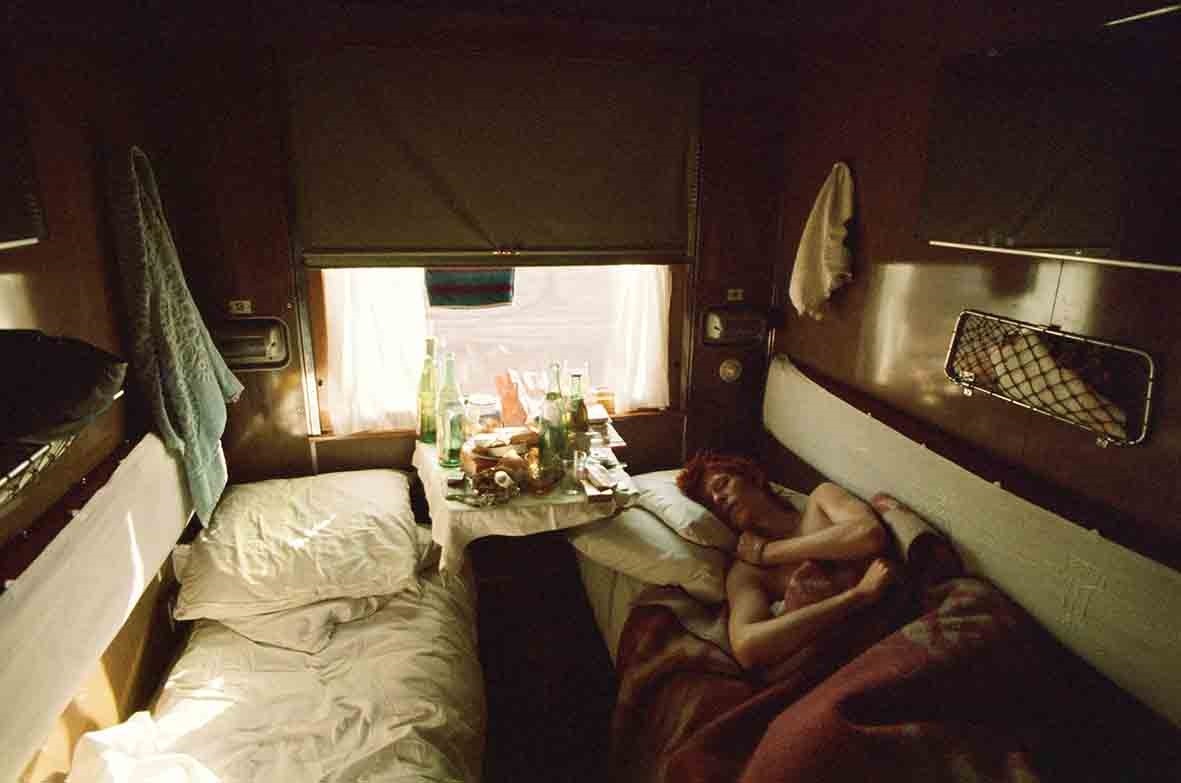
It’s obvious that the person who took this shot of Bowie letting the train take the strain back at the height of glam rock was someone to whom the star was very close. Step forward Geoff MacCormack, Bowie’s lifelong friend, travel companion and sometime musical partner.

“The two first met at school when Bowie’s family moved up in the world to Bromley after David’s dad got a job with what was then the Dr Barnardo’s charity,” said the exhibition’s curator Martin Pel.

“They were both eight years old; MacCormack’s father was half-Jamaican and Bowie himself – then plain David Jones, of course – was painfully pale so they both stood out from the other kids and became close as a result.”

Both lads had older brothers who introduced them to jazz and literature, and the pair would spend hours listening to music from across the Atlantic and dreaming of what life must be like in America.

“MacCormack himself had been groomed for a singing career in the late 1960s, but his heart wasn’t really in it,” Martin added. “He did have a good voice, and Bowie asked him to join the Spiders From Mars band in 1973 and, for the next three years, he had a whale of a time.”

In this photograph, for example, MacCormack has captured the starman – red Ziggy Stardust hair and all – snoozing on the Trans-Siberian Express as he headed back home from a tour in Japan. (Bowie refused to fly anywhere so the pair travelled first class on cruise ships and trains).

“The table in the middle gives an idea of the fun they were having,” said Martin. “Those empty bottles had been shared with a group of Russian soldiers with whom the two Englishmen had got riotously drunk the previous night,”

MacCormack later performed as a singer and dancer on the theatrical Diamond Dogs tour of the US in 1974 and stayed around for the subsequent albums which reflected Bowie’s fascination with American culture and genuine love for soul music, Martin added.

“I think it’s hard for Geoff to be objective about those days. He was in the centre of it, after all, and he’s not massively aware of just how important those times were for the rest of us.

“Sometimes when I visited him, he’d say ‘hang on, I’ve just found this in my loft, what do you think?’. He’d pull out some more priceless memorabilia, acetates of unknown songs for never-to-be-completed projects or another remarkable photograph.”

One, captured on the set of the film, The Man Who Fell to Earth, featured the Thin White Duke wearing his pyjamas and ready for bed once again.

David Asleep on the Trans-Siberian Express, (1973); copyright, Geoff MacCormack. Used with permission. First published in July 2021.


Read more